

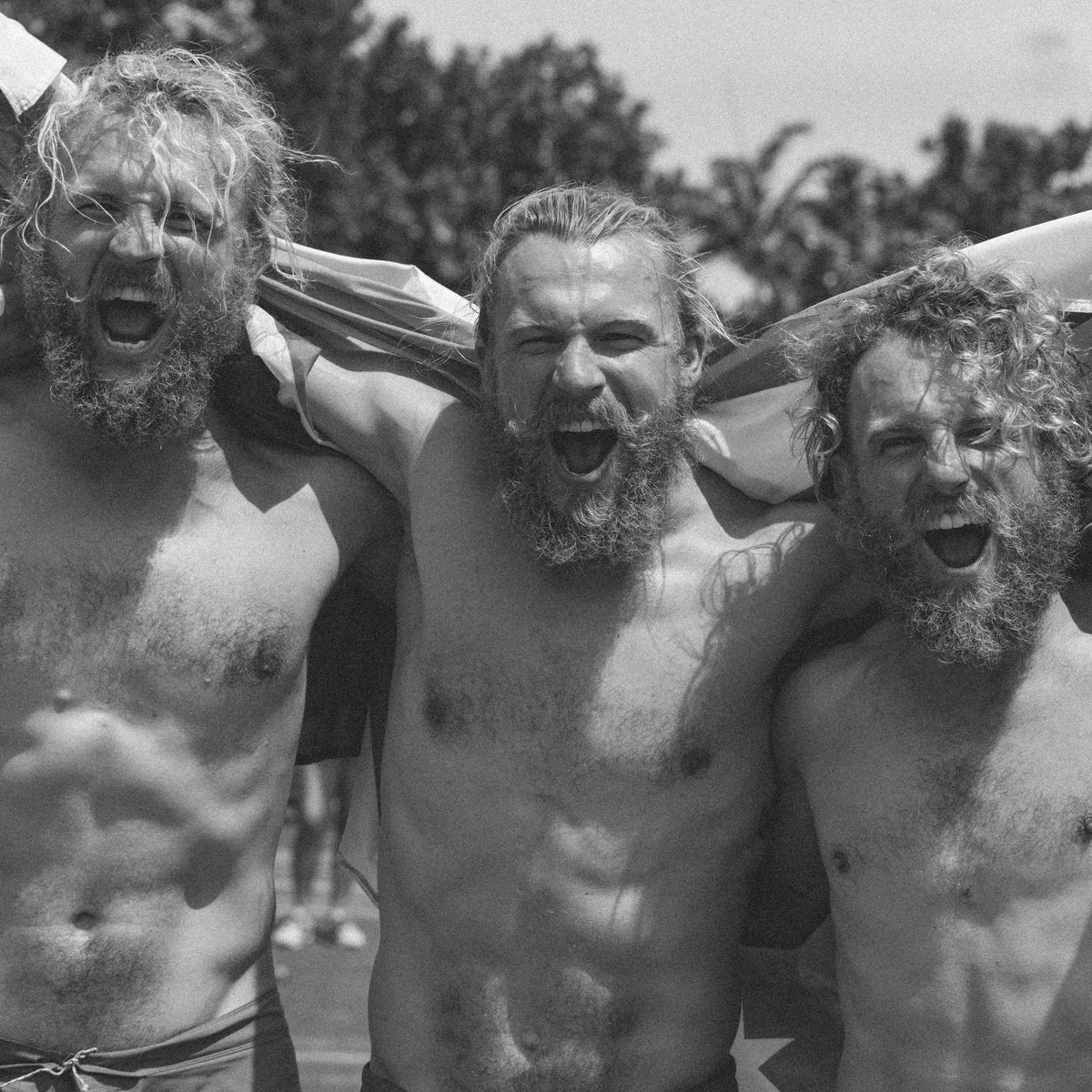
Steel & Grit Series. Episode One: The Maclean Brothers.
A story of three brothers, one rowing boat and 139 days crossing the Pacific. Unsupported and non-stop, off the back of an Atlantic crossing before it. Along the way they've raised over £1 million for clean water projects in Madagascar, been called mid-ocean by Flea from the Red Hot Chili Peppers, and had Jamie livestream a set of bagpipes into a stadium in the middle of the crossing.
We sat down with them to talk about where it all started, what nearly broke them, and what's next.
 Have you always been into adventure?
Yes, I think so, although we probably didn't think of it as "adventure" when we were young. We grew up just outside Edinburgh, beside the Pentland Hills, so from a very early age we had this easy access to the outdoors. I remember being carried up the hill on Dad's shoulders as a very small boy, picking wild raspberries and thinking it was the most exciting thing in the world.
On Mum's side, our grandparents had a tiny wee house in Assynt, on the northwest coast of Scotland. It had started life as a ruin and Grandpa had built it into a fairly ramshackle summer house. There was no television, no internet, and the only phone line was the public phone box in the middle of the village. We spent weeks and weeks of our childhood up there, making our own fun: exploring the woods and coastline, rock pools, fires, dens, spears, tiny boats full of holes. I think that was hugely formative. It gave us a love of wild places and probably planted the seeds of the adventurous spirit we have now.
Have you always been close as brothers?
We've been very lucky. We had a loving upbringing and were together a lot as three boys of fairly similar ages. Poor Mum was often outnumbered by us and Dad, and Lachlan, being the youngest, was generally the brunt of whatever mischief Jamie and I were getting up to.
I wouldn't say we were always as close as we are now, but that closeness has definitely built over time. One thing that brought us closer was when Mum and Dad split up when we were in our late teens. That was difficult, as it is for anyone who goes through it, and I think the three of us instinctively wanted to look out for each other. It was a sudden realisation that these amazing parents we had were also just human beings, trying to work through their own difficulties.
 Not long after that, Lachlan started talking about rowing the Atlantic together as brothers. It just felt like the right fit for us. Going through that whole process – trying to get a boat, build a campaign, prepare for an ocean – definitely brought us closer. Like any intense experience, whether it's a new job, school, university or an expedition, you band together to get through it. That has happened with us again and again.
What influence has Scotland played in your adventurous lives?
Scotland has influenced us hugely. We've been so lucky to spend so much of our lives in Assynt, with its dramatic coastlines, mountains and wild, barren places. It's an amazing landscape to get lost in and explore.
That part of Scotland shaped us as people who love wilderness, the outdoors and a slightly rough-edged sort of adventure. It gave us an affiliation with the sea too, even though we didn't grow up as sailors or rowers. We just had tiny boats, usually full of holes, and a coastline that encouraged you to go and find out what was round the next headland.
Rowing the Atlantic was enough for me! What motivated you to row the Pacific?
The Atlantic was a huge challenge for us. We had no rowing experience and very little credibility in that world, so we approached it by trying to do every aspect as well as we possibly could. We came back having grown a lot personally, broken a few records, and, more importantly, raised around £200,000 for charity.
Afterwards, we were able to visit some of the projects that money had supported, particularly in Madagascar. Seeing the impact of clean water projects first-hand was hugely motivating. Clean water is something we take completely for granted, but it is foundational. It affects health, education, livelihoods, women's safety, children's time, and almost every part of daily life.
 That experience made us want to do more. We founded The Maclean Foundation and started thinking about how we could raise a really significant amount of money – something like a million pounds. At first, the Pacific was one of those ideas that was almost immediately shelved because it seemed too big: up to six months at sea, nonstop and unsupported, with no precedent for a team doing it in that way. But we couldn't shake it. It kept coming back. Eventually it felt like the right campaign to build around that million-pound target.
You guys were very clever with your social media strategy. How did you design it
The most important thing was having a very clear goal: to raise £1 million for clean water projects. Everything had to point towards that.
Beyond that, we knew we couldn't predict exactly what would work. We didn't know what we'd have energy for, what people would respond to, or what would catch fire from a PR or social media point of view. So rather than designing an overly rigid strategy, we focused on building a team we trusted and then being willing to double down on whatever was working.
Technically, we had to be able to capture and send things back from the boat. That sounds simple, but in the middle of the Pacific it meant power, Starlink, cameras, phones, charging systems and all the rest of it. Then, on land, we had people we trusted turning that into social content, YouTube films, PR moments, daily emails, website updates and fundraising pushes.
 Our cousin managed the campaign on land, and Story Shop, who had helped us on the Atlantic, were brilliant at turning moments from the boat into stories that could travel. The broad strategy was mass awareness, but always with the aim of translating that awareness into actual donations.
When I rowed the Atlantic with Cracknell, the music to our row was the Red Hot Chili Peppers. Was it true you played the bagpipes with the Red Hot Chili Peppers from the boat?
Not quite, but it was every bit as surreal as it sounds.
Flea from the Red Hot Chili Peppers started following the row completely organically. Growing up, the Chili Peppers were one of those proper rock-and-roll bands – absolute icons – and we were playing a lot of their music on the crossing. If a big squall was coming in, "Can't Stop" was exactly the sort of thing you'd put on and just ride it out.
We ended up having a call with Flea from the boat. We were all quite nervous beforehand because he is so effortlessly cool, and I think we all started swearing more than usual to try to come across as cooler than we actually are. But he was lovely – very generous, very spiritual, and just a delight to speak to.
 The bagpipes actually came through a different route. Flea shared some of our videos, the All-American Rejects caught wind of it, and they got in touch. They were playing at Comic Con and asked whether Jamie could livestream in from the Pacific and play the bagpipes at the start of "Swing, Swing". It was absolutely hilarious. I think it was the most out-of-tune I've ever heard the pipes, because the key was completely wrong, but it was brilliant. I'm not sure Jamie will be invited back as a temporary member of the band, but it was one of the most surreal things to happen in the middle of the ocean.
You raised a huge amount of money for clean water in Madagascar. How and why did you choose this as your motivation?
It started with the Atlantic row. We chose to support Feedback Madagascar, an Edinburgh-based charity, partly because Lachlan had visited Madagascar when he was younger and had seen some of their work. After the Atlantic, we went out to Madagascar ourselves and spent time with their staff and with the communities they work alongside.
Seeing the contrast between villages with clean water and those without was very powerful. It is difficult, from a developed country, to properly understand what clean water means because we take it totally for granted. But in the communities we visited, it changes almost everything.
 As an engineer, one number has always stuck with me. If you divide the cost of a borehole by the number of people it serves, it can be around £30 per person for clean water, effectively for life, provided the borehole is properly maintained. That is an astonishingly direct, tangible impact. We've now been fundraising for clean water for five or six years, and the motivation has only grown.
What was the hardest thing about the Pacific row?
The row itself was totally relentless. Once you set off, there is no real rest. You are rowing day and night, through heat, rain, storms, sleep deprivation, sores, exhaustion and the sheer mental grind of keeping going. It is very simple, but it is very hard.

 But some of the hardest things were actually happening off the boat. When loved ones were struggling, or worried about us, that could be very difficult to carry. My partner Fran was a lifeline for me. Every night she would send me a long voice note, and during my night shift I would send one back. But when she was finding it hard, that affected my mindset on the boat. You want nothing more than to be off the boat and back home, able to offer some comfort.
Later in the row, we also found out that our father had been diagnosed with throat cancer. We had suspected something was wrong because he had lost his voice, but hearing that news while still weeks away from land was incredibly hard. You feel helpless. You just want to be there.
I spoke to you all at the latter end of the journey. How were you coping at that stage when the wind was blowing you north?
That was a tough period. We had been given an estimated arrival of about 17 days, and we had started telling loved ones that we were nearly there. Then the weather changed completely. Suddenly 17 days became six and a half weeks, we had to divert to avoid a cyclone, and we ended up rowing hundreds more miles.
 That was difficult because hope can be the thief of joy when it goes the wrong way. You raise everyone's expectations, including your own, and then suddenly the finish line moves much further away.
At the same time, the support coming into the boat was incredible. Speaking to people like you, Ben, and feeling that people were willing us on, made a huge difference. So it was two-sided: we were on a low ebb in some ways, but there was also this sense that momentum was building, that maybe we would reach the other side, and maybe – just maybe – we might even reach the million-pound target.
How was it adapting back into normal life?
These things take time to process. We had gone from months of training into 139 days at sea, exercising more than we had ever exercised in our lives. Then suddenly it stops. The endorphins drop, the challenge is gone, and you are back on land trying to work out what comes next.
 Very quickly after arriving, we agreed to write a book, which became a whole challenge in itself. The timeline was intense, but in some ways it helped because it gave us a project and a way to process the row while it was still fresh. Luckily, we had written daily ship's logs throughout the crossing, so we had a lot of material to draw on.
For me personally, I had worked as an engineer at Dyson for nearly ten years, but I had handed in my notice before the Pacific because I couldn't do both. So I didn't come back to a normal corporate job. Normal life has gone from being quite structured and rigid, to the chaos of trying to build a life around adventure, charity, storytelling and working with my brothers. It is not always tidy, but it is exciting.
 What does normal life look like now?
The book has been a major focus. We've also been doing talks and trying to work out how we can keep working together as brothers.
Another big project has come from the food we made for the row. Jamie is a chef, and all of us care a lot about food, so we couldn't find a freeze-dried meal off the shelf that we were happy with. Jamie led the charge and we ended up making and freeze-drying around 600kg of meals for the Pacific. They were amazing. We arrived having lost fat and gained muscle, and we were all the same weight or heavier than when we left, which is almost unheard of on ocean rows. So now we're exploring whether we can make the best freeze-dried meal brand in the world.
The charity is also a huge focus. The £1 million we raised through The Maclean Foundation is going to Feedback Madagascar, and we'll be working with them over the next three to four years to help deliver and advocate for that programme. Beyond that, we want The Maclean Foundation to keep growing and support other effective clean water initiatives around the world.
The Indian Ocean next?
We'll have to see. It is the obvious one if we wanted to complete the loop, but we should probably give our family, friends and partners a bit of a break first.
Our more immediate sights are set on rowing across the Minch, between mainland Scotland and the Outer Hebrides. We actually tried before the Pacific and failed, which was slightly concerning for friends and family. They quite reasonably asked how we could possibly be thinking about rowing across the Pacific if we couldn't even get across the Minch.
So there is unfinished business there. We're keeping the boat and there will definitely be more adventures. Whether the Indian Ocean calls, we'll see.
What does the outdoors mean to you?
For me, the outdoors has always meant family. So much of our childhood was spent outside with Jamie, Lachlan, Mum, Dad and friends up in Nedd. Whenever I've travelled, I've always been drawn to wild outdoor places, and often those experiences have been with family too.
There is no end to the wonder of wild places. There is huge joy in them, and I think they are very precious. In our own way, we all want to protect them, spend more time in them, and continue to get lost in them.
Buffalo Hall of Fame / Golden Buffalo
We're genuinely honoured to welcome the Maclean brothers into the Buffalo Hall of Fame, each awarded a Golden Buffalo for services to adventure. Thank you to them for their support throughout the Pacific row, and for keeping in touch.
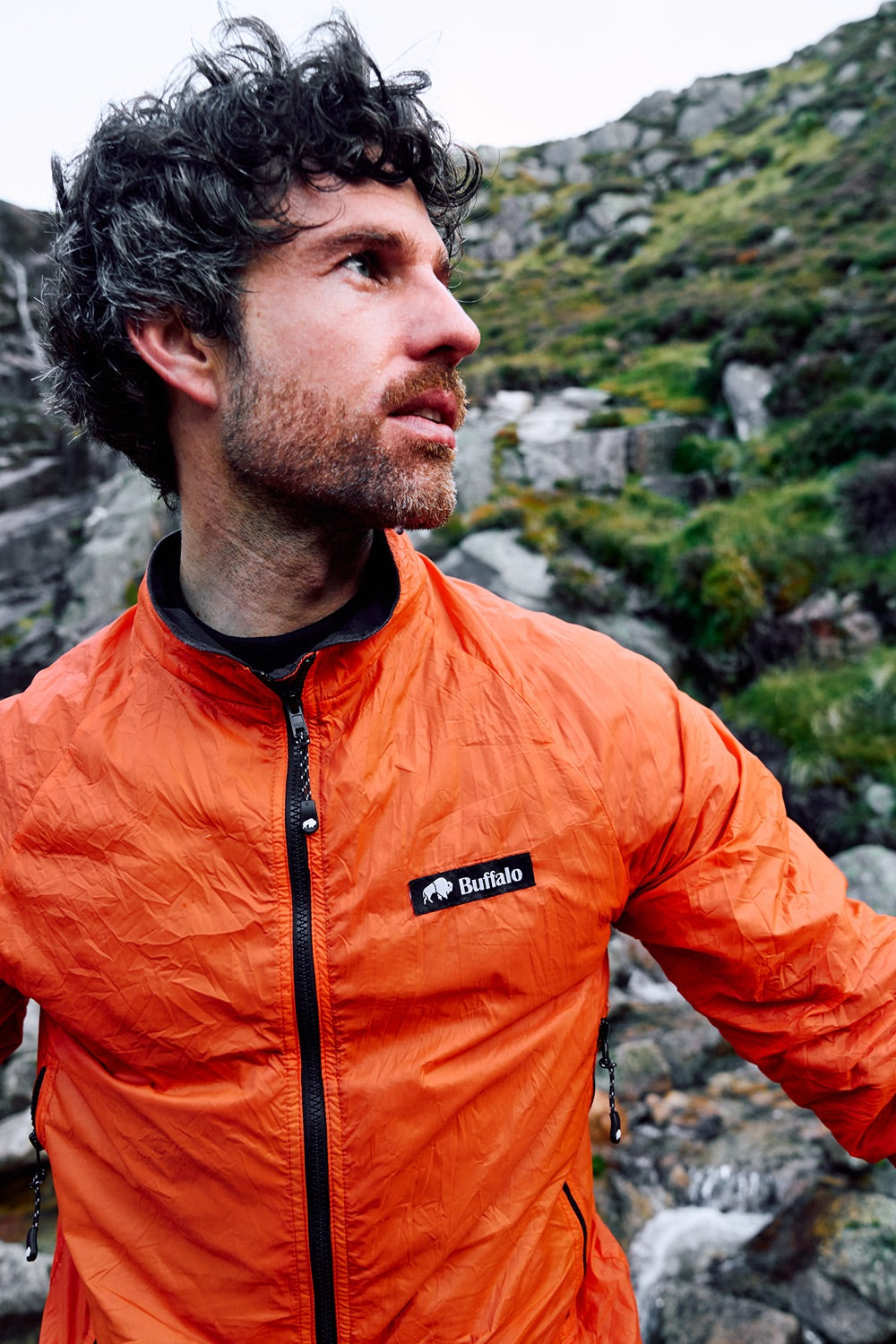
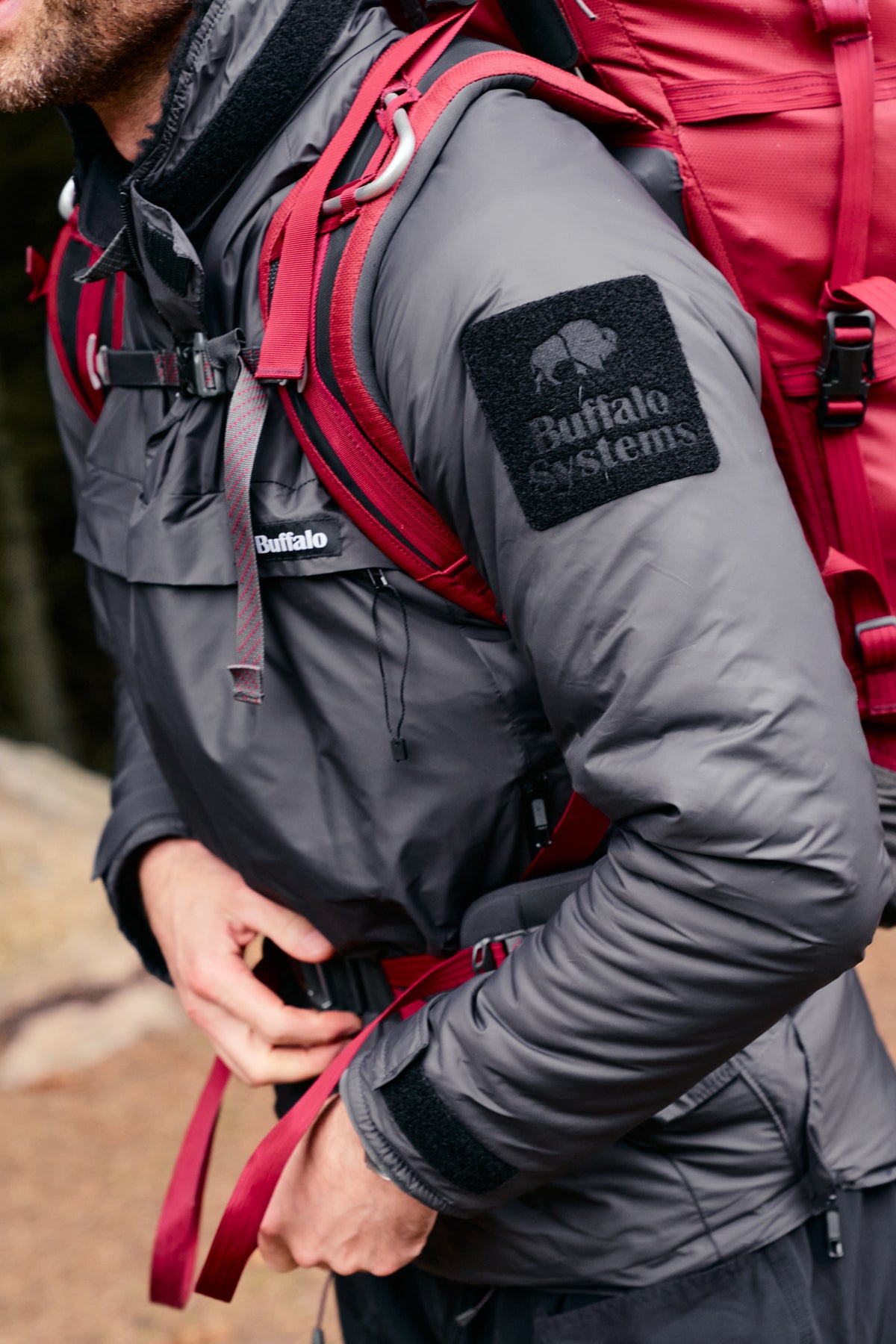
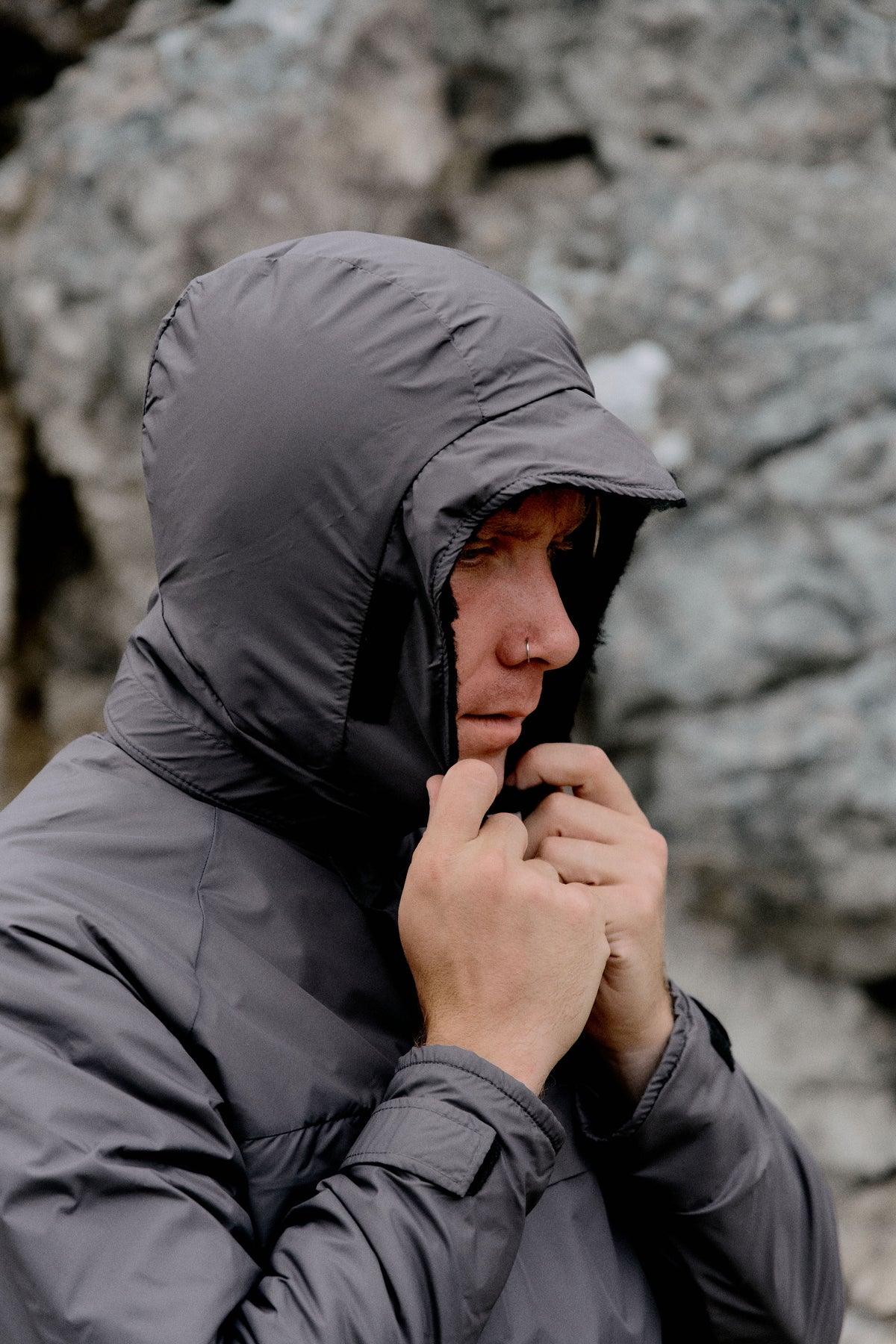
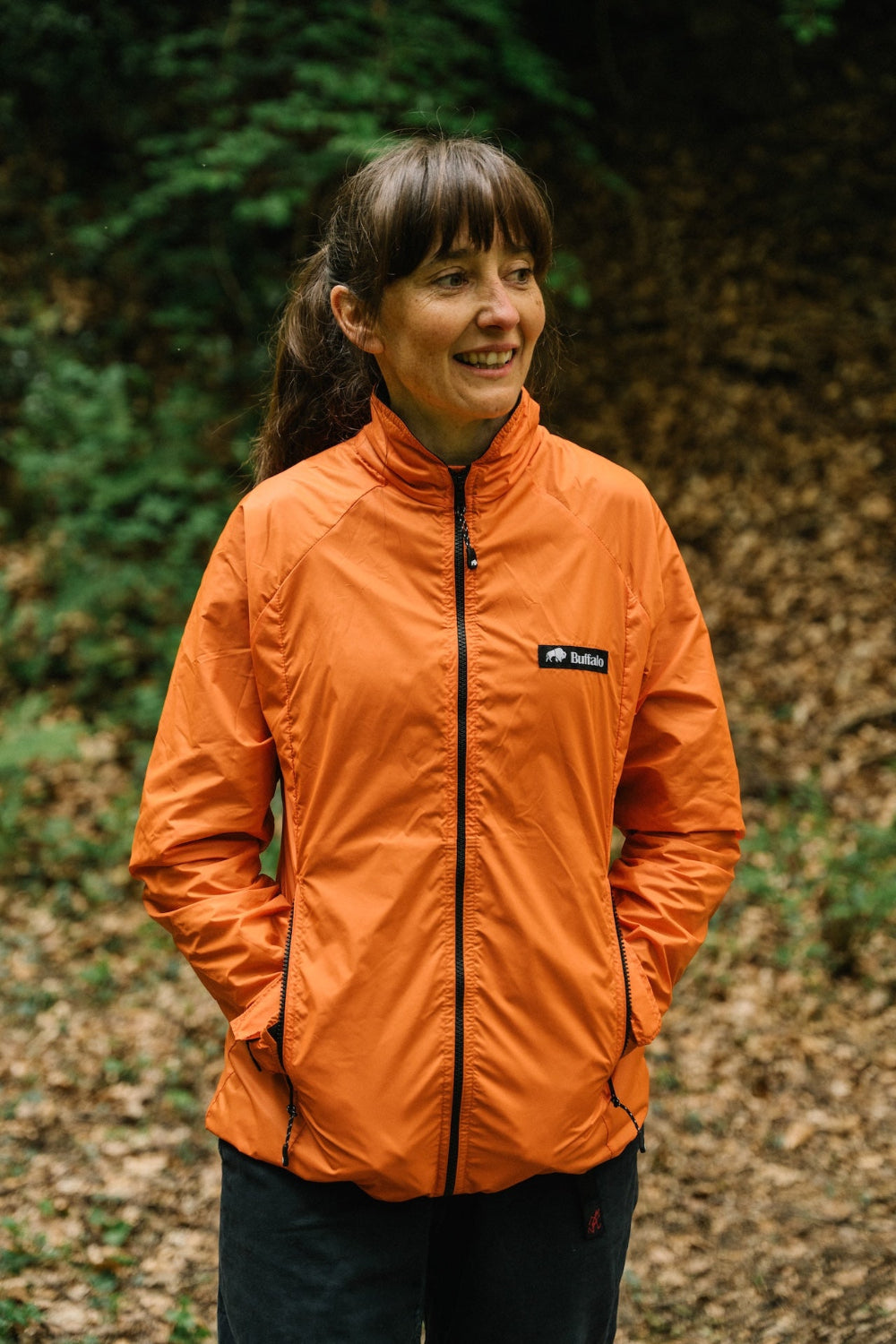
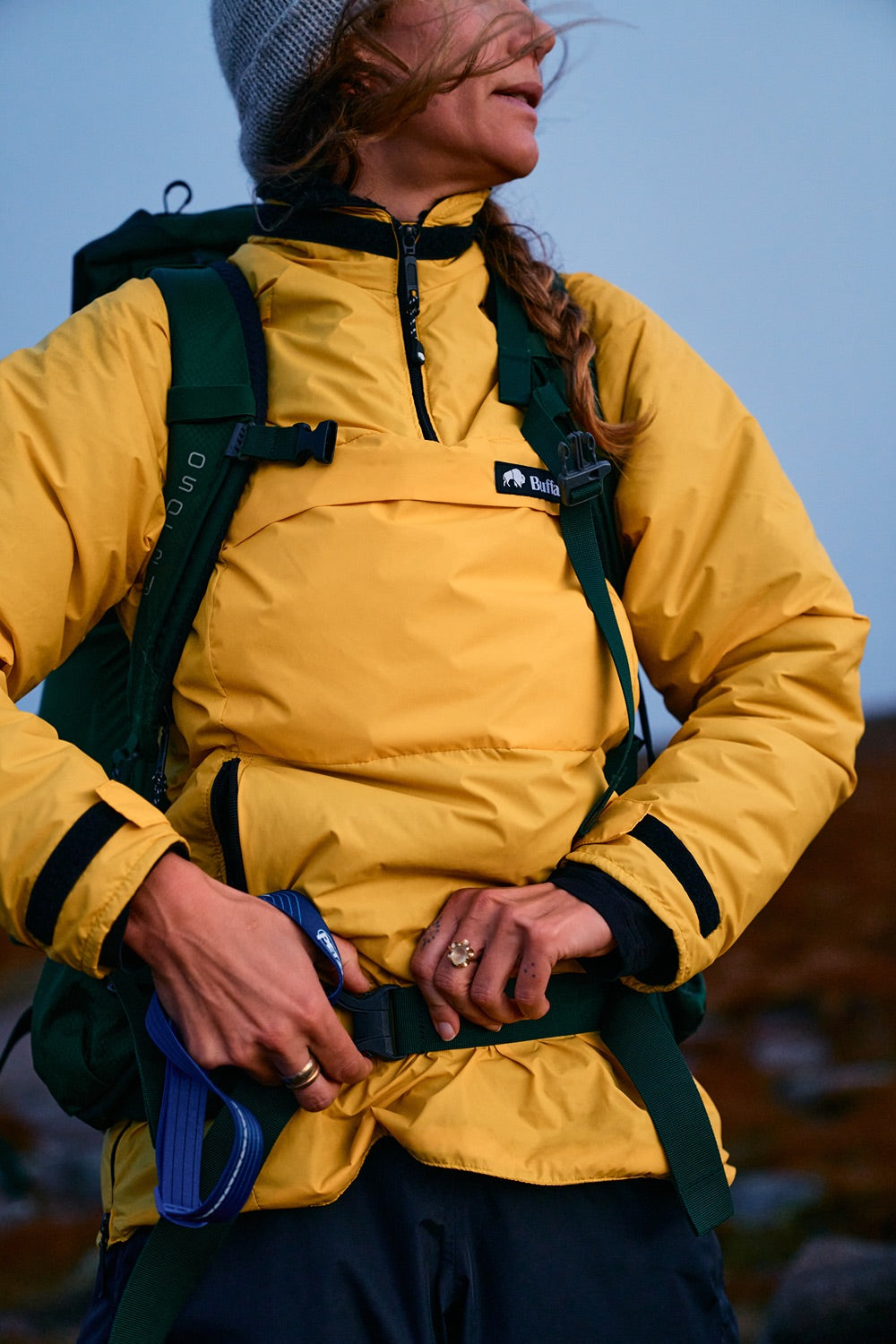
And we absolutely love seeing them in the Buffalo jackets we sent. They've been wearing them nonstop.
Their new book, Three Brothers in a Boat: A True Story of Adventure and Purpose Rowing the Pacific, is out this September.

Read more
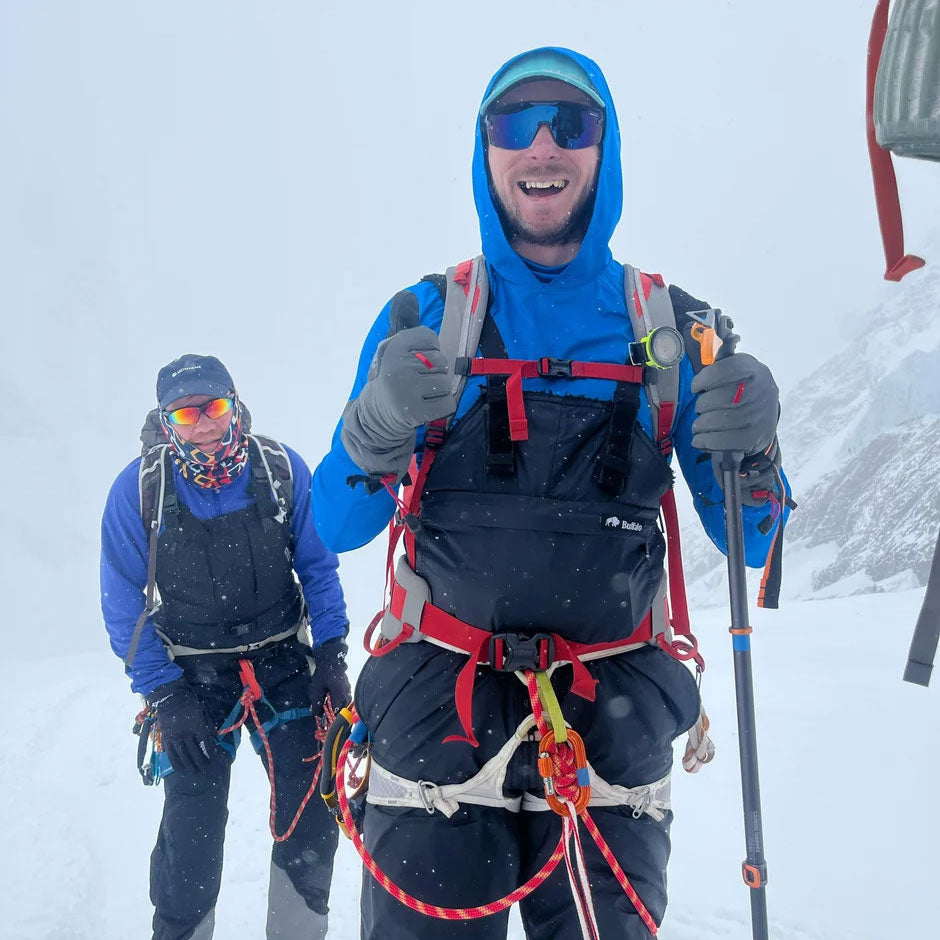
Climbing the Khumbu Icefall. Crossing crevasses. Hauling instruments through deep snow and shifting weather. This is Losing Their Cool, a high-altitude research expedition led by scientists from fi...
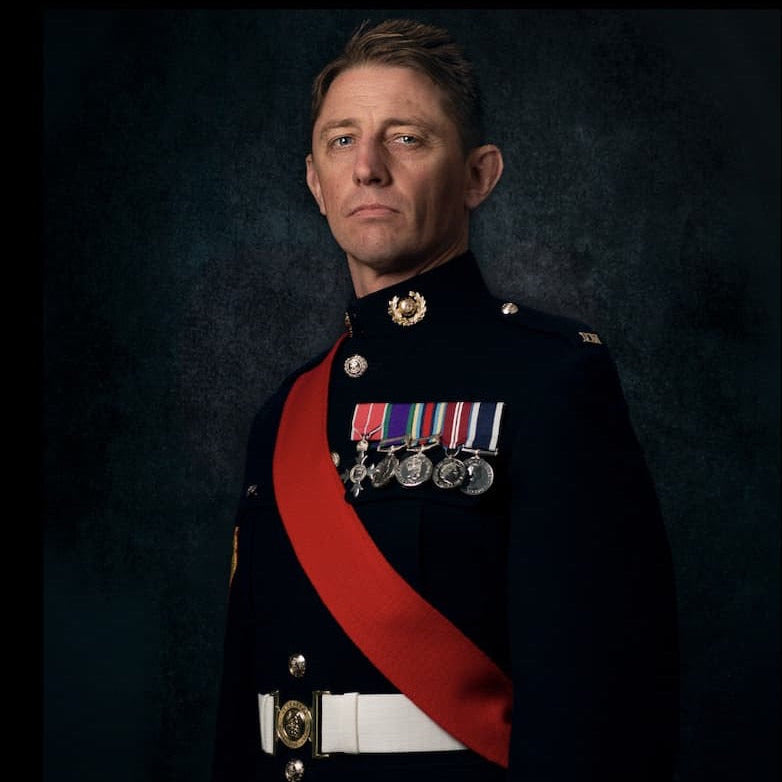
Sam Sheriff MBE.
Twenty-two years a Royal Marines Commando, he served in every Commando Unit and every environment, from Arctic to jungle to desert, and became the first serving Royal Marine to earn a Brazilian Jiu...
Leave a comment
All comments are moderated before being published.
This site is protected by hCaptcha and the hCaptcha Privacy Policy and Terms of Service apply.